Two weeks before my first half marathon,
I tore my ACL.
The injury was only the beginning. What came next was a maze of appointments, insurance delays, conflicting advice, rehab milestones, scattered notes, and decisions I didn’t even know I was supposed to be making.
Even with good doctors and physical therapists, I often found myself trying to connect the dots across a fragmented system.
ACL Ally is the companion I wish I had then: a clearer way to understand where you are, what questions to ask, and how to feel less alone on the long road back to recovery.
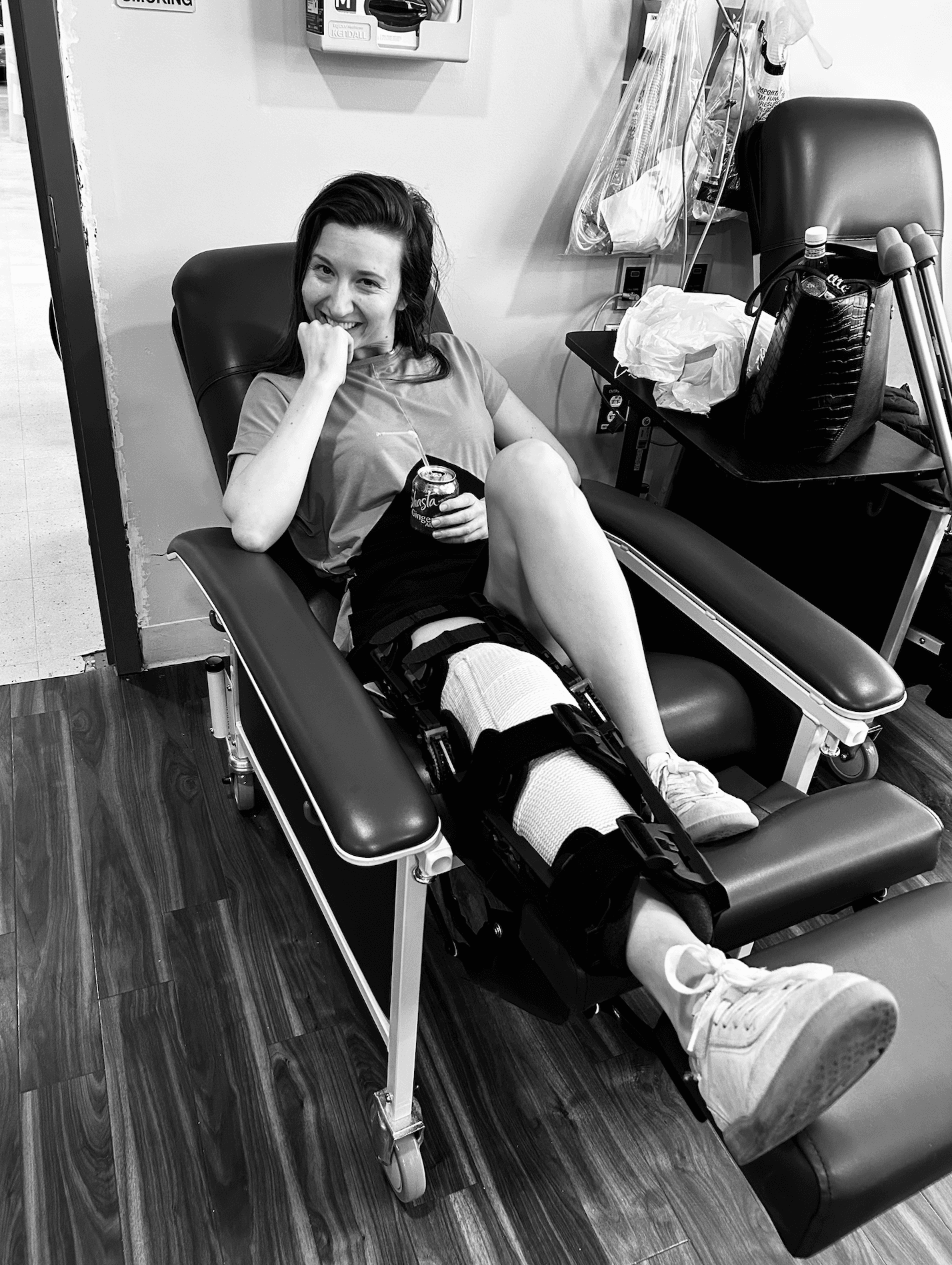
Smiling but completely out of sorts on the inside
I found out months later that the weeks before surgery shape the months after it. That window closed without me ever knowing it was open. It should be the first thing anyone hears.
My surgeon, my PTs, and the internet all said something different. I didn’t need one perfect answer. I needed help triangulating the different pieces so I could decide what to do next.
Running was how I stayed active, regulated stress, and felt like myself. Then suddenly I couldn’t run: at the exact moment my body needed energy, protein, and patience to rebuild.
ACL recovery is full of small moments most people never see: the daily PT exercises, the tiny wins, the confusing setbacks, the constant recalibration of what feels okay and what doesn’t. I found myself not just recovering from an injury, but grieving the ease I used to have (the ability to run, move, work out, and trust my body without thinking so much).
That part surprised me. The physical recovery was one thing. Rebuilding confidence in my own body was another.
I thought I knew my body. This injury showed me I didn’t.
I’d been an athlete for years: national-level swimming, then triathlons. Running long was the one frontier I hadn’t crossed yet, which is what that first half marathon was about. My body had always just done what I asked of it, so it humbled me to realize how little I actually understood it.
Physical therapy has been a strange kind of gift. It’s shown me exactly where I’m weak, and where I quietly overcompensate without noticing. I’m still in it, but I can see clearly now that there’s light on the other side of this journey.
A companion that meets you at your stage, keeps your story in one place, and walks into every appointment with you.
ACL Ally doesn't diagnose and it doesn't replace your care team. It does the quieter job: making sure you understand what's happening, know what to ask, and don't sit in another waiting room feeling unprepared or alone.
Two dots: you, and someone
who's been there.